
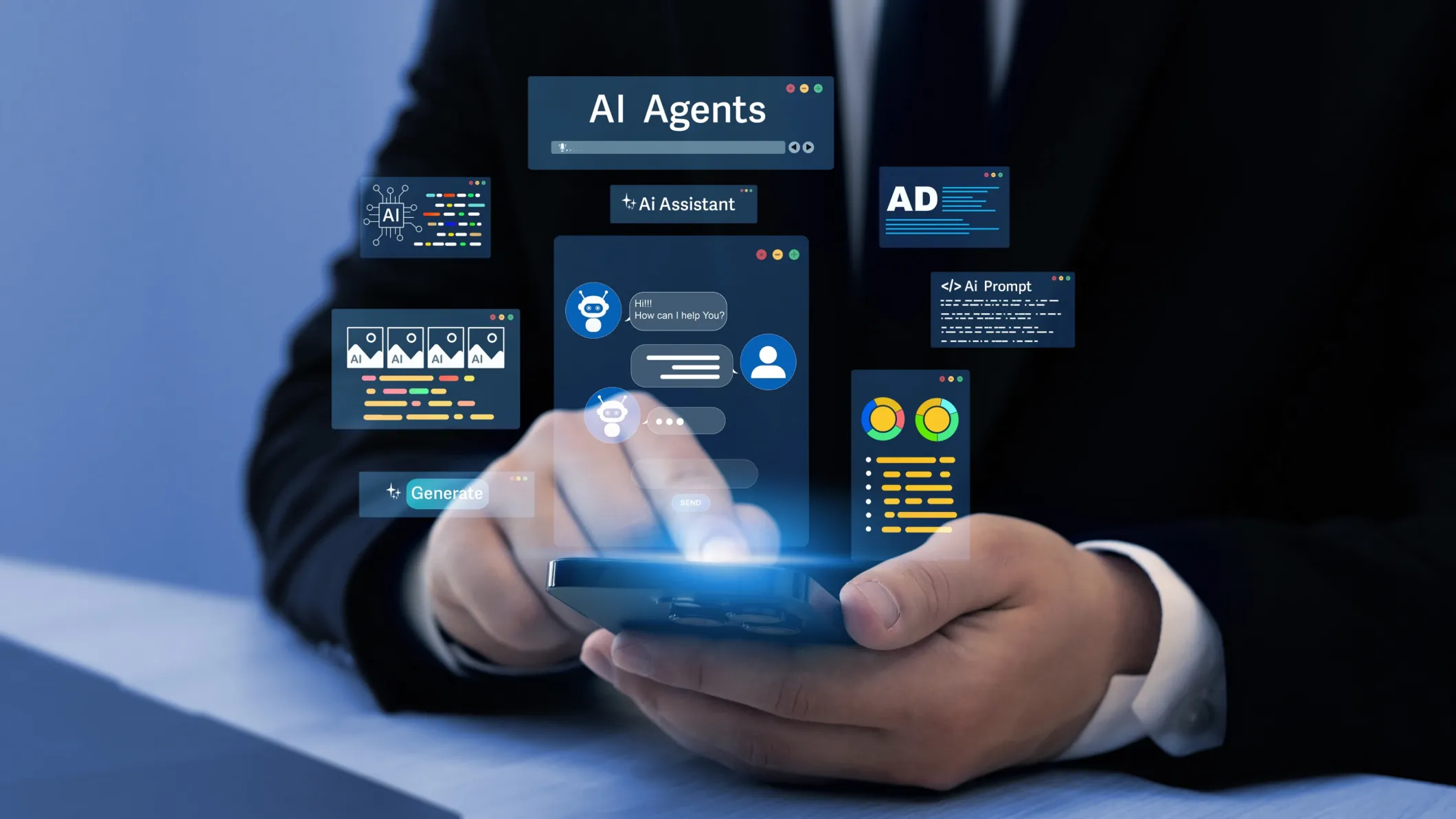
Single AI agents produce small business enhancements. Groups of AI agents working together produce exponential results. This distinction shows the difference between small increases in productivity and a transformational change to the way business operates.
Companies using integrated agent teams notice a twenty-fold increase in capability compared to standalone systems. The enhanced value originates from unexpected capabilities emerging from combined agent behaviors.
Emergent Intelligence in AI Ecosystems
Complex systems develop features that individual components cannot develop themselves. Logistical problems get solved by ant colonies although individual ants do not understand these solutions. Market participants do not calculate prices yet markets independently discover them. Individual AI agents of an agent ecosystem create solutions they would not be capable of creating independently. Proper ecosystem design serves as the basis for emergence at this scale. Using random agent deployment results in chaos rather than creating synergies. Wisdom in architecture helps produce helpful teamwork which results in groundbreaking outcomes. The solution for customer retention in your enterprise agent ecosystem operates through multiple specialized AI agents. Specialized agents conducting research choose outreach activities and monitor tracking relationships while overseeing planning interventions and coordinate execution. Multiple agents working together produce retention strategies that surpass those developed by any single agent independently.
Optimal Agent Specialization
Generalist AI agents tackle all tasks without excelling at individual aspects. Specialist professionals achieve substantial expertise through their concentrated work in defined industry domains. Ecosystem achievement depends on selecting specialization levels just right which controls capability depth and limits coordination difficulties. The abundance of specialists creates network complexities that overshadow the collaborative advantages. Scarce specialists minimize what they can master causing reduced overall system performance. Perfect ecosystems utilize strategic management to handle these competing principles.
Think about sales operations. Different AI agents work on:
- Research for potential clients
- lead follow-up
- client interaction scheduling
- bid development
- pricing
- deal execution
client connection monitoring services.
Their specialized knowledge surpasses the capabilities of generalists. Coordination systems allow specialists to successfully transfer their work between themselves. This targeted approach achieves higher-quality results throughout the entire customers’ interaction. Specialist authorities monitor all contact points. The quality of customer experience from specialist directors outperforms generalist methods.
AI agents supporting specialization include sophisticated coordination infrastructure. Noca.ai enables specialist AI agents collaborating seamlessly without requiring manual integration between specialized capabilities.
Standardized Agent Interaction
Standardization of agent communications enables all members of an ecosystem to collaborate effectively. The presence of incompatible communication methods prevents individual AI agents from coordinating properly even though they excel individually.
A thriving ecosystem uses explicit instructions to determine how agents exchange information while co-ordinate their work and obtaining help from each other and reporting exceptional issues. Structured protocols allow ecosystems to optimize their collaborative efforts. Your operations ecosystem covers inventory agents alongside procurement agents together with production agents and logistics agents plus financial agents. Standardized protocols allow different specialties to coordinate without interruptions. Automated protocol-based communications trigger procurement operations and production scheduling and logistics planning and financial forecasting whenever inventory shortages occur.
Noca.ai uses fully developed communication protocols so agents can work together at large scale. Systems work productively together because they don’t need special integration to connect their individual agent pairs.
Intelligent Resource Allocation
Limited resources shared by multiple AI agents create opportunities for operational disputes. The distribution of computing capacity alongside API quotas and database connections and network bandwidth needs to be shared among different user needs. Inadequate resource handling results in internal agent battles that hamper total system performance. Priority-based and urgency-based and business-value-based intelligent allocation systems help distribute resources effectively. The analytics ecosystem at your company contains reporting agents alongside forecasting agents and trend analysis agents together with anomaly detection agents. During rapid data throughput situations resource allocation focuses on imminent reporting tasks and vital anomaly detection activities ahead of standard analytics operations. Resource constraints do not stop your company from achieving its business objectives. Sophisticated resource management systems in AI agent platforms support effective functioning of ecosystems. Noca.ai manages resources efficiently among agent groups to minimize clashes and maximize system results.
Reputation-Driven Influence
Agent ecosystems build trust relationships which identify agents who deliver dependable results. Eco systems delegate greater decision authority to high-trust participants relative to low-trust members. Performance history establishes trust relationships. The entire system implements trust relationships which create quality incentives. Erroneous outputs from an AI agent result in decreased levels of influence. The appropriate level of authority develops from high consistency. A systems approach results in general improvements within ecosystem quality. The units in your risk management framework are made up from fraud detection problems and compliance monitoring tasks and audit trail operations and exception reporting duties. The agents who perform best build higher trust level rankings. Newer agents go through additional verifications while the oldest agents produce responses right away. Trust network optimization results in better response quality.
Knowledge Sharing Across Agents
Knowledge learned by a single AI agent spreads advantages to the whole ecosystem’s advantage when learning extends accurately. Separate knowledge gains accumulate into a higher-level intelligence state which multiplies beyond what one agent can create alone. Aspects of your customer service system encompass operators who handle inquiries and those who resolve issues and oversee escalations along with users who measure satisfaction. Resolution agents uncover effective approaches to particular issue types. This knowledge then flows to inquiry agents and to escalation agents to enhance routing and prioritization respectively. The ecosystem collectively learns.
AI agent platforms which support knowledge sharing help ecosystems develop their capabilities rapidly. Noca.ai enables an automatic propagation of learning among related AI agents. Operation-wide benefits flow from insights that appear anywhere in the system.
Resilient Ecosystem Design
Individual AI agent failures shouldn’t collapse entire ecosystems. Resilient designs include redundancy, graceful degradation, and automatic recovery enabling continued operation despite component issues. When your procurement agent encounters service disruptions, backup agents assume responsibility temporarily. Dependent agents adjust workflows accommodating temporary capability gaps. Operations continue despite failures. Recovery happens automatically without manual intervention. This resilience transforms ecosystem reliability. Organizations tolerate occasional component issues without operational impact. Systems maintain service levels despite imperfect conditions.
Continuous Ecosystem Evolution
Agent ecosystems must evolve permanently because technical advancement, insights of performance continue to develop and business requirements transform. To keep service functioning throughout evolution periods proper version control systems with deployment strategies need to be advanced and refined.
AI agents added to ecosystems integrate themselves effortlessly. Completely new agents deploy into production operations without halting the ongoing service. Outdated agent models exit operations smoothly once new models demonstrate full operational readiness. Evolution occurs continuously while operational stability remains intact. Your marketing system continually integrates new campaign management agents together with updated analytics agents and enhanced personalization agents. The evolution process takes place in incremental phases so ecosystem operations stay fully functional at all times. Centralized operations maintain their functional stability while capabilities undergo ongoing development.
Controlled evolution support in AI agent platforms enables ongoing improvements alongside risk-free operations. Noca.ai handles agent lifecycle operations consistently to achieve seamless progression across ecosystems.
Holistic Ecosystem Governance
Comprehensive governance frameworks control member behavior throughout agent ecosystems with their complexity. Boundary definitions for individual AI agents don’t produce proper ecosystem results without integrated governance. The entire ecosystem depends on holistic governance to unite individual agent functions effectively. Ecosystem governance establishes operational conduct standards together with leadership frameworks and resource restrictions with documentation preservation and monitors regulatory conformance for all agent operations. Your financial ecosystem collects sensitive information through numerous data-handling agents. Governance frameworks allocate information access between agents who maintain their operational boundaries while monitoring their audit process and regulatory adherence. Individual agent governance brings about compliance at the ecosystem-wide level. Noca.ai delivers full ecosystem governance based on TRAPS principles which include: trusted, responsible, auditable, private, and secure. Organizational requirements guide the behaviors of individual team members as well as whole teams.
Coordinated Agent Operations
Modern software systems that coordinate many specialized AI agents through complex workflows demand advanced orchestration capabilities for route and dependency management and exception handling and resource allocation. Task distribution functions automatically. Dependency chains receive absolute management. Exception incidents receive accurate and timely escalation. Resource allotments operate with maximum efficiency. System coordination challenges escalate exponentially in relation to ecosystem dimensions. Ten agents perform with limited coordination demands. Fifty agents need fairly advanced coordination systems. Two hundred agents need advanced control capabilities.
Noca.ai delivers complete orchestration for widespread virtual agent ecosystems. System coordination happens autonomously because of smart infrastructure without tedious manual connection work.
Conclusion
AI agent evolution from isolated implementations to coordinated ecosystems represents fundamental capability advancement. Organizations building productive agent societies extract exponentially more value than those deploying individual capabilities independently. The transformation requires understanding emergence principles, specialization economics, communication protocols, resource management, trust networks, learning propagation, failure resilience, evolution management, comprehensive governance, and sophisticated orchestration.
Markets increasingly reward organizations mastering ecosystem dynamics. They build digital societies delivering capabilities impossible through isolated agent deployments. Performance advantages compound as ecosystems evolve while competitors struggle with individual implementations.


